Multilevel unanchored meta-regression
Plots for ML-UMR with disconnected evidence
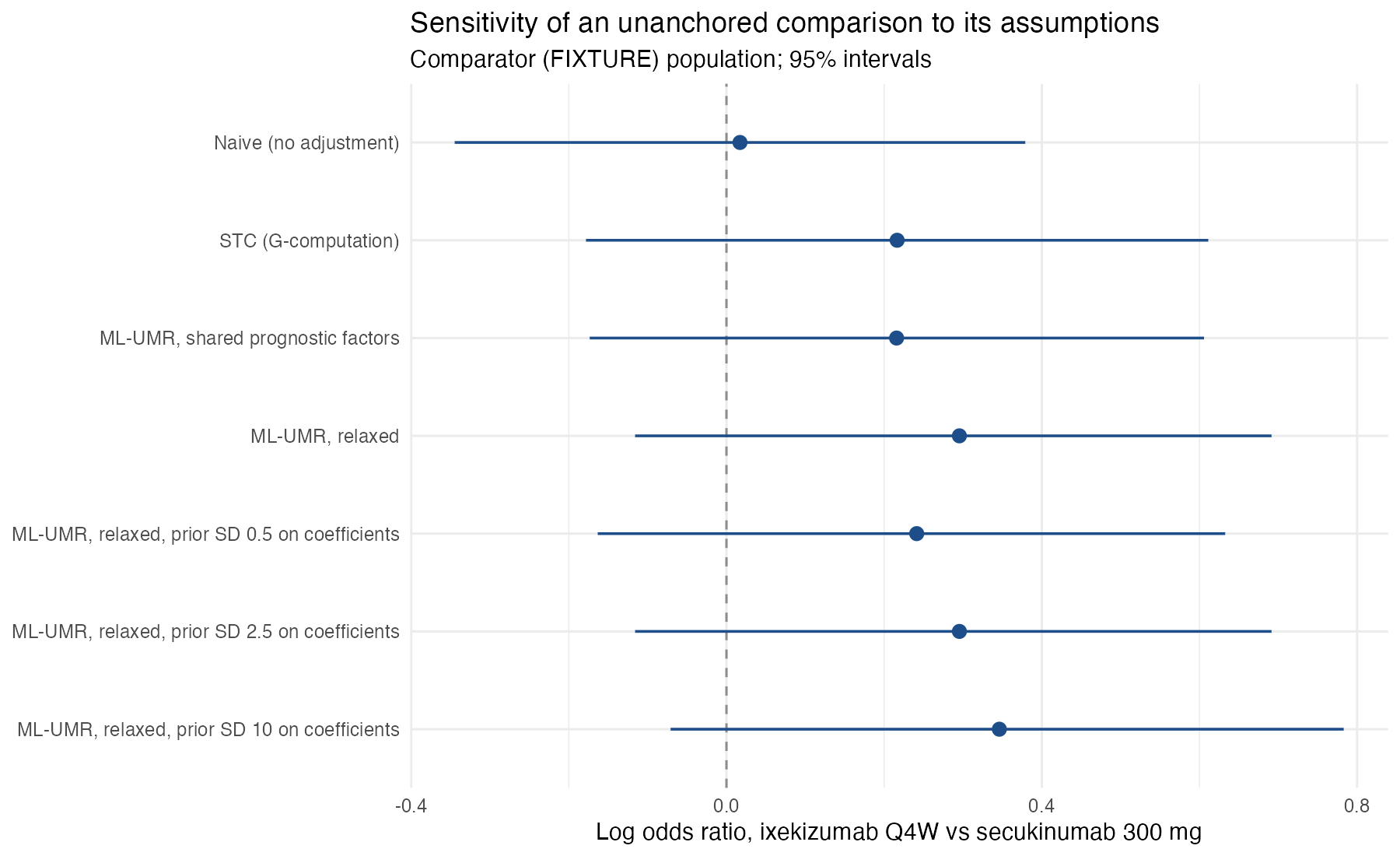
ML-UMR (Chandler and colleagues, 2026) extends ML-NMR ideas to disconnected, unanchored comparisons: it jointly models individual and aggregate data and marginalizes over each study’s covariate distribution, but without a common comparator every prognostic factor and effect modifier must be modeled correctly. The mlumr R package implements shared-prognostic-factor (SPFA) and relaxed variants. Because the method is new, there is no single established ML-UMR plot; the graphics below make absolute predictions and assumption dependence explicit.
Minimum graphical set
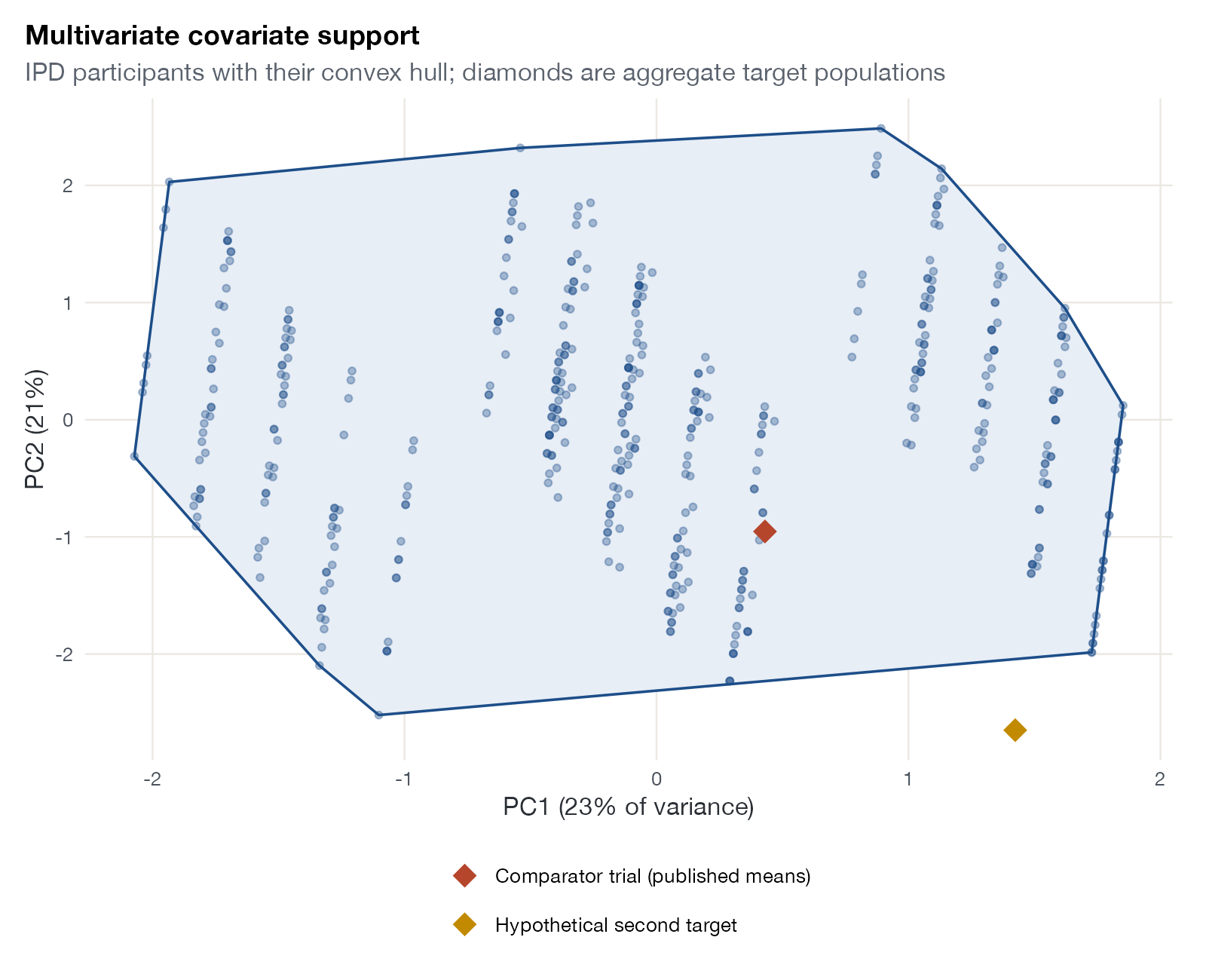
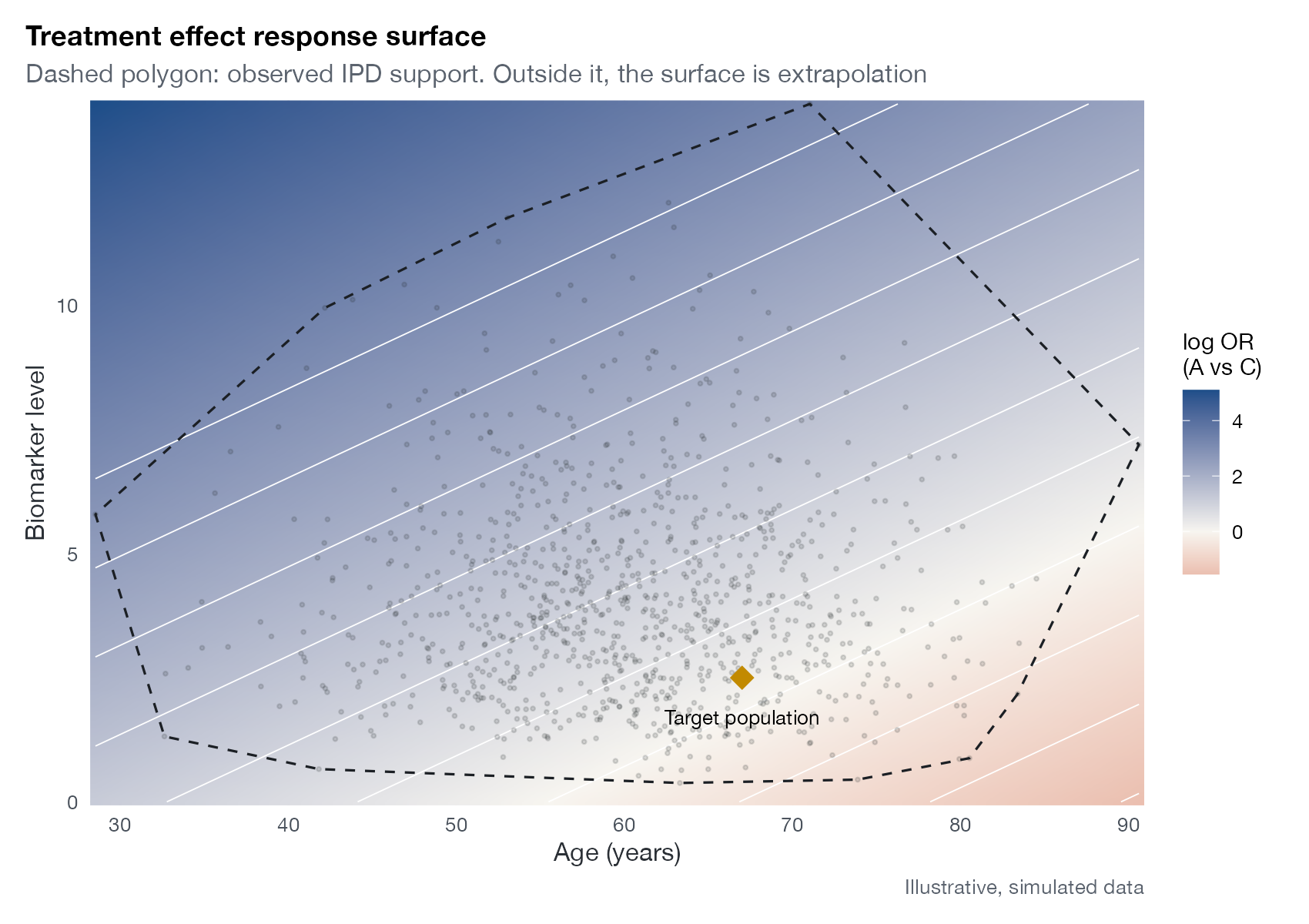
- Population support: multivariate support plot and transitivity plot.
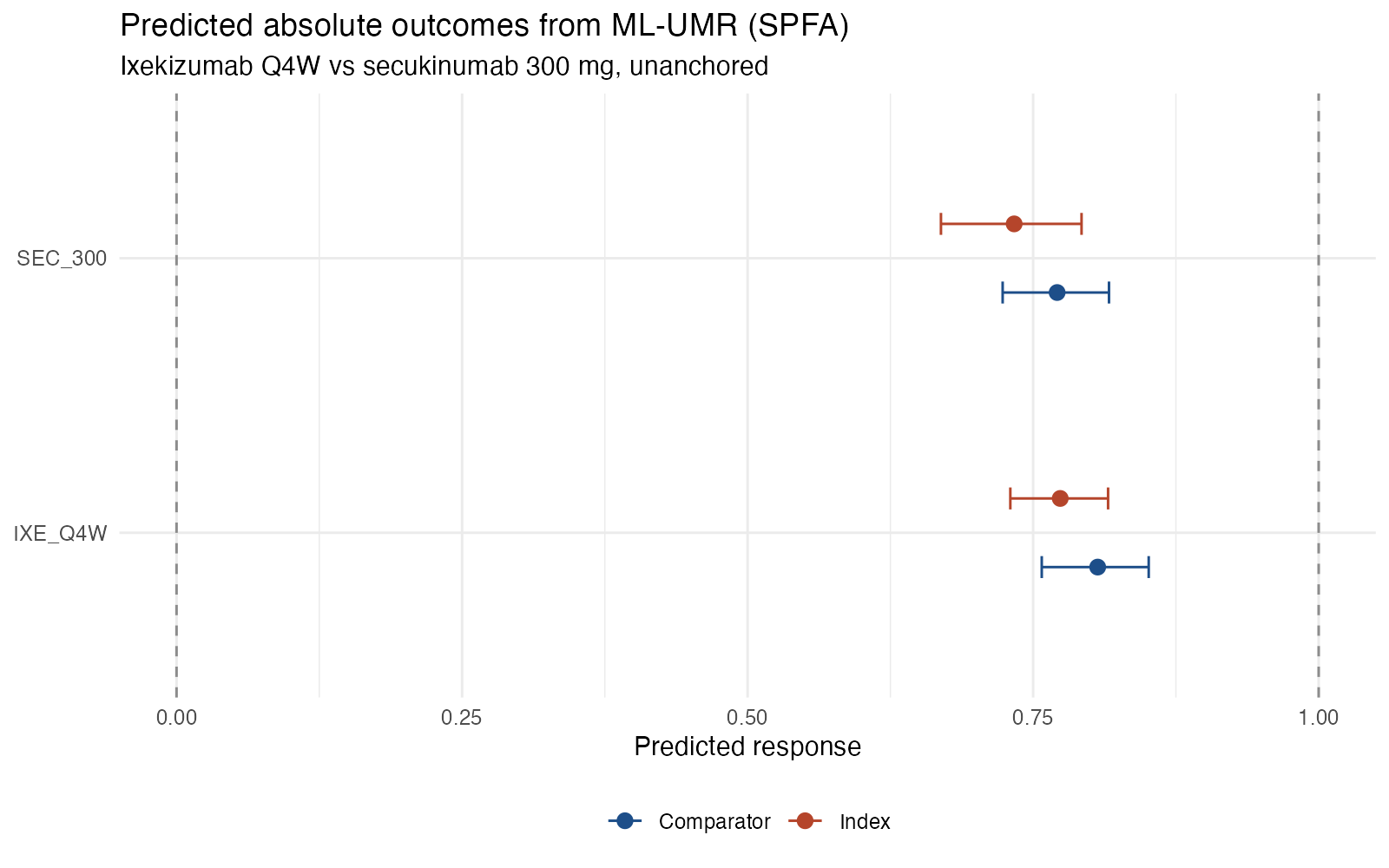
- Absolute outcome predictions for each treatment in the target population.
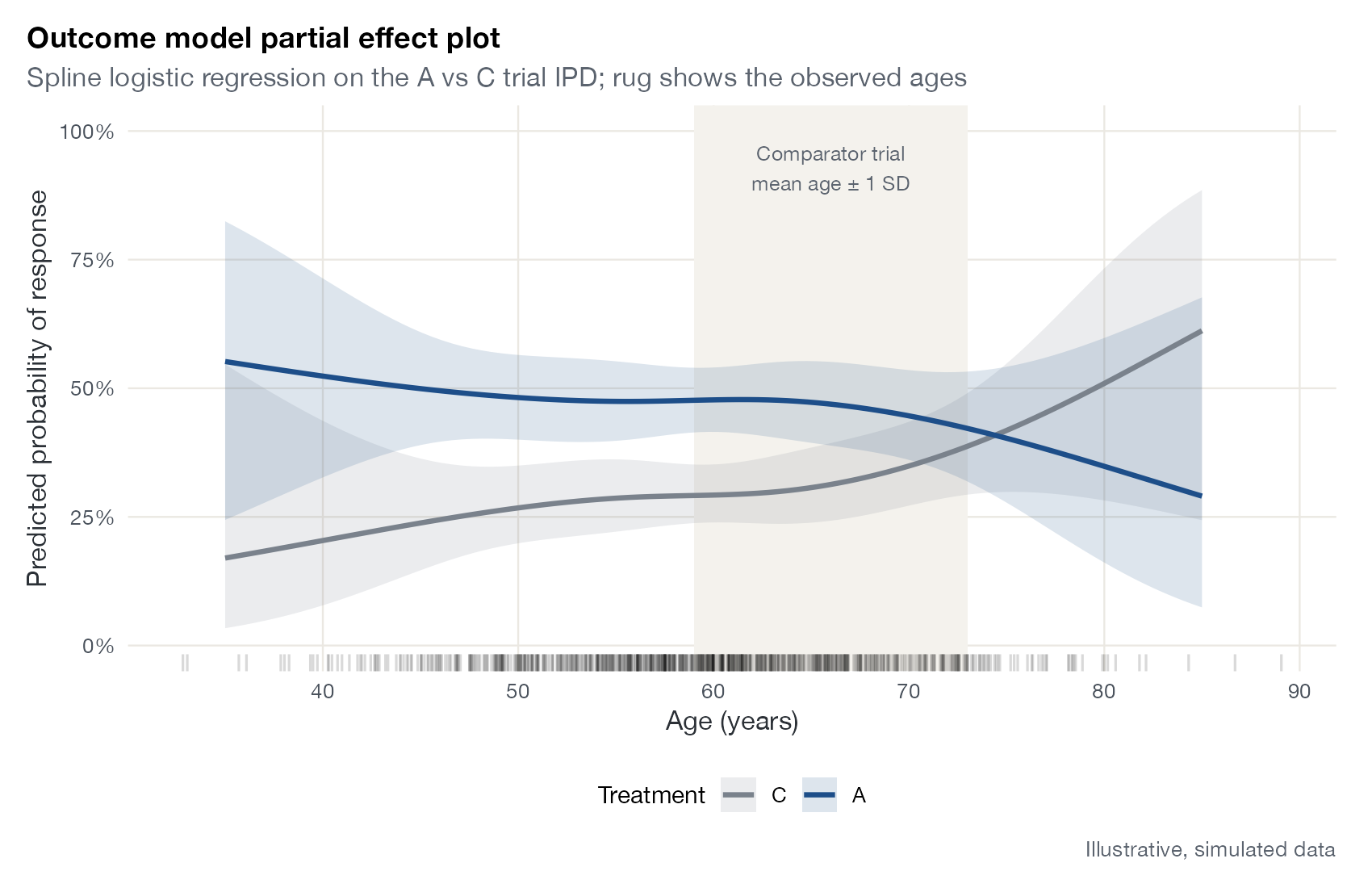
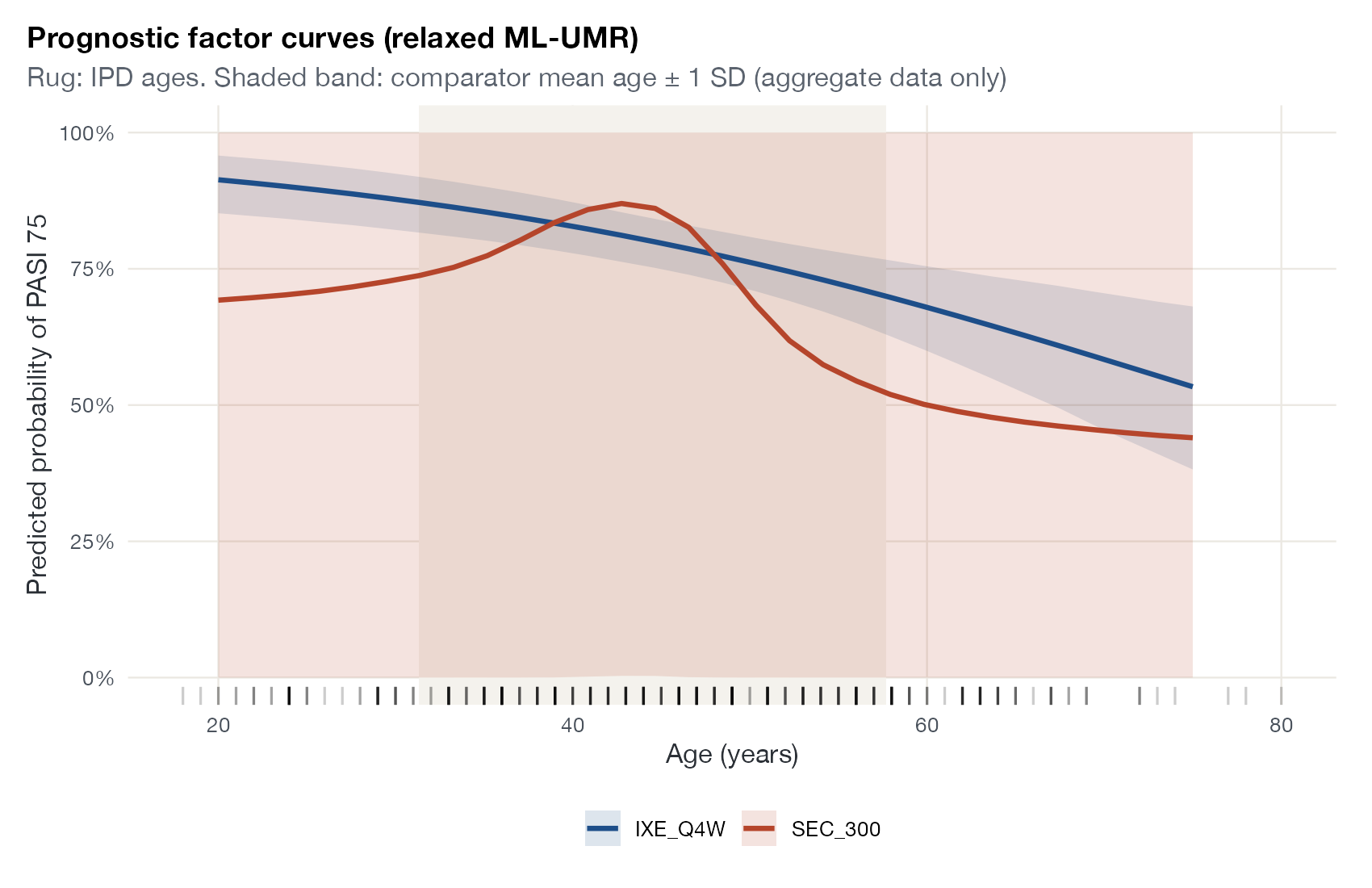
- Prognostic factor curves with the observed covariate range marked.
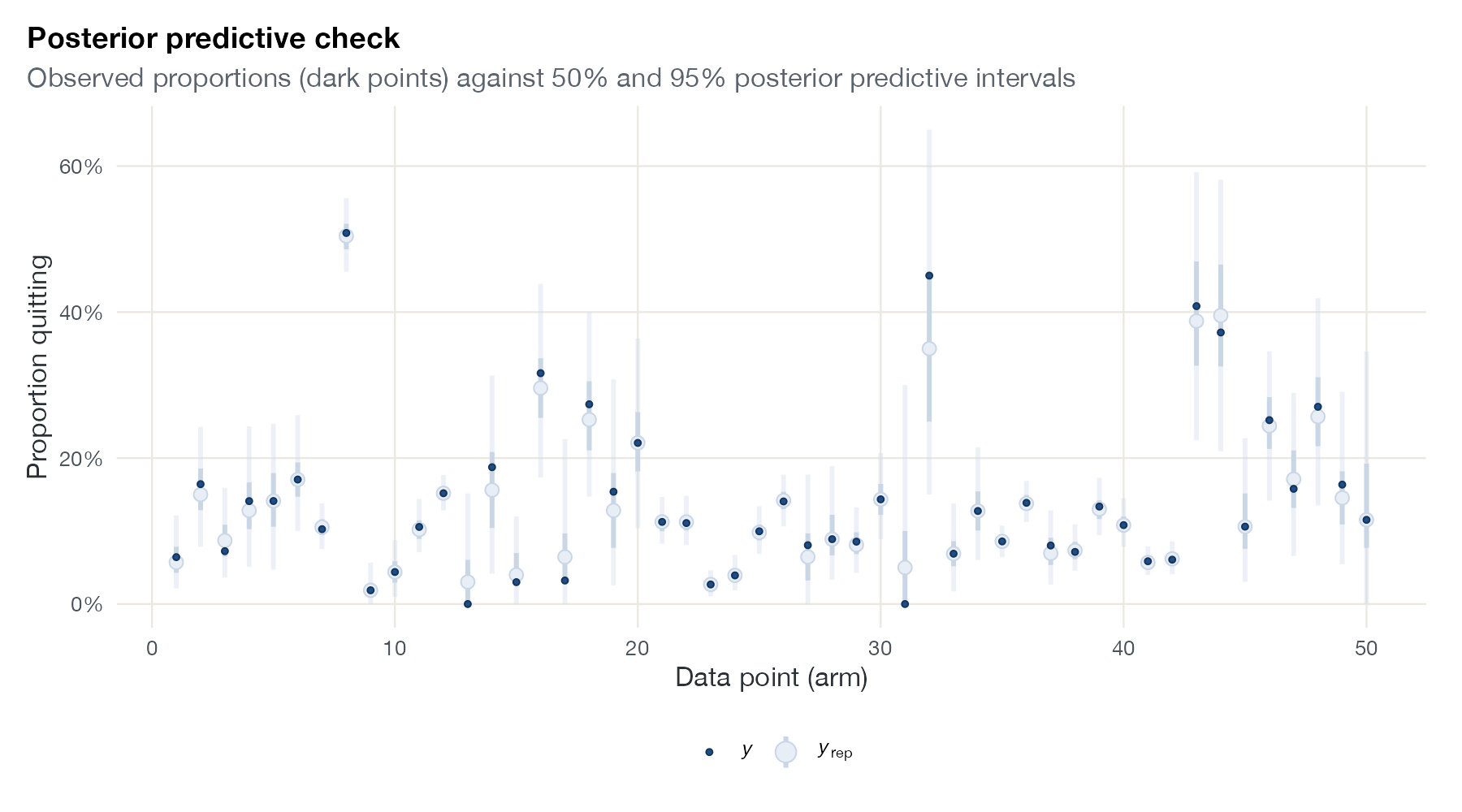
- Posterior checks and prior versus posterior plots.
- An explicit assumption sensitivity plot.
All plots for ML-UMR
Effect display
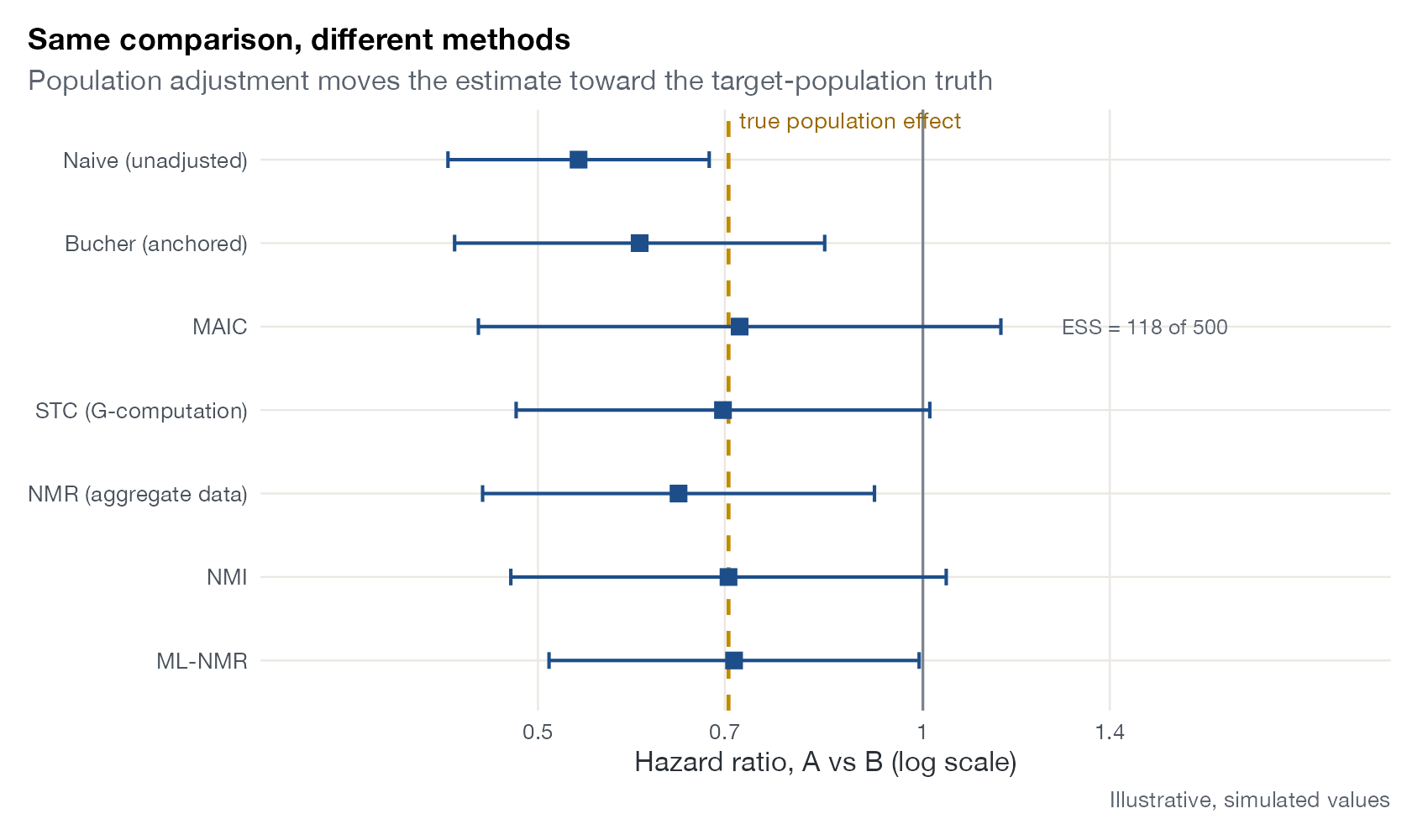
Estimates, intervals, and pooled summaries: the forest plot and its many descendants.
Model checking and Bayesian diagnostics
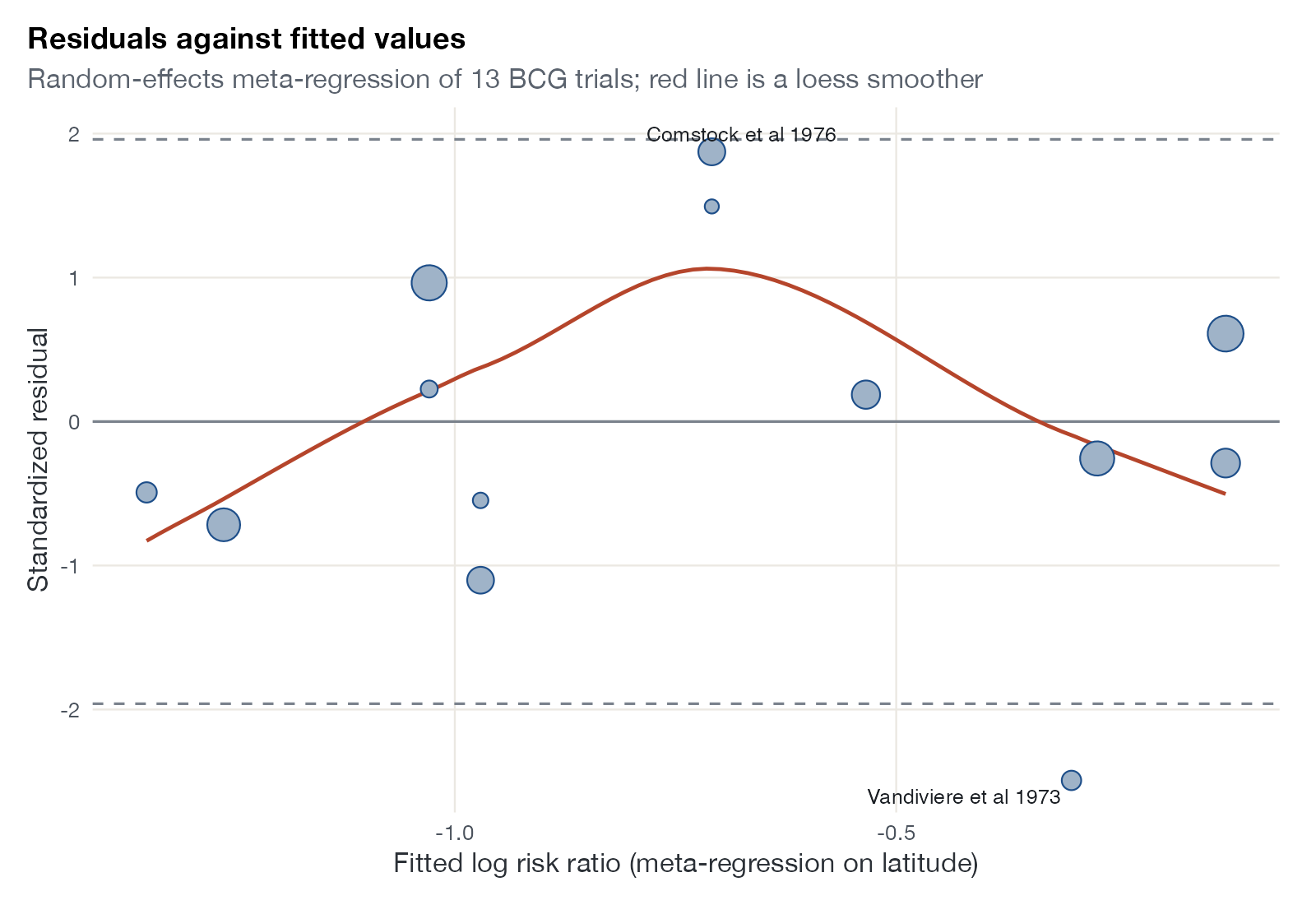
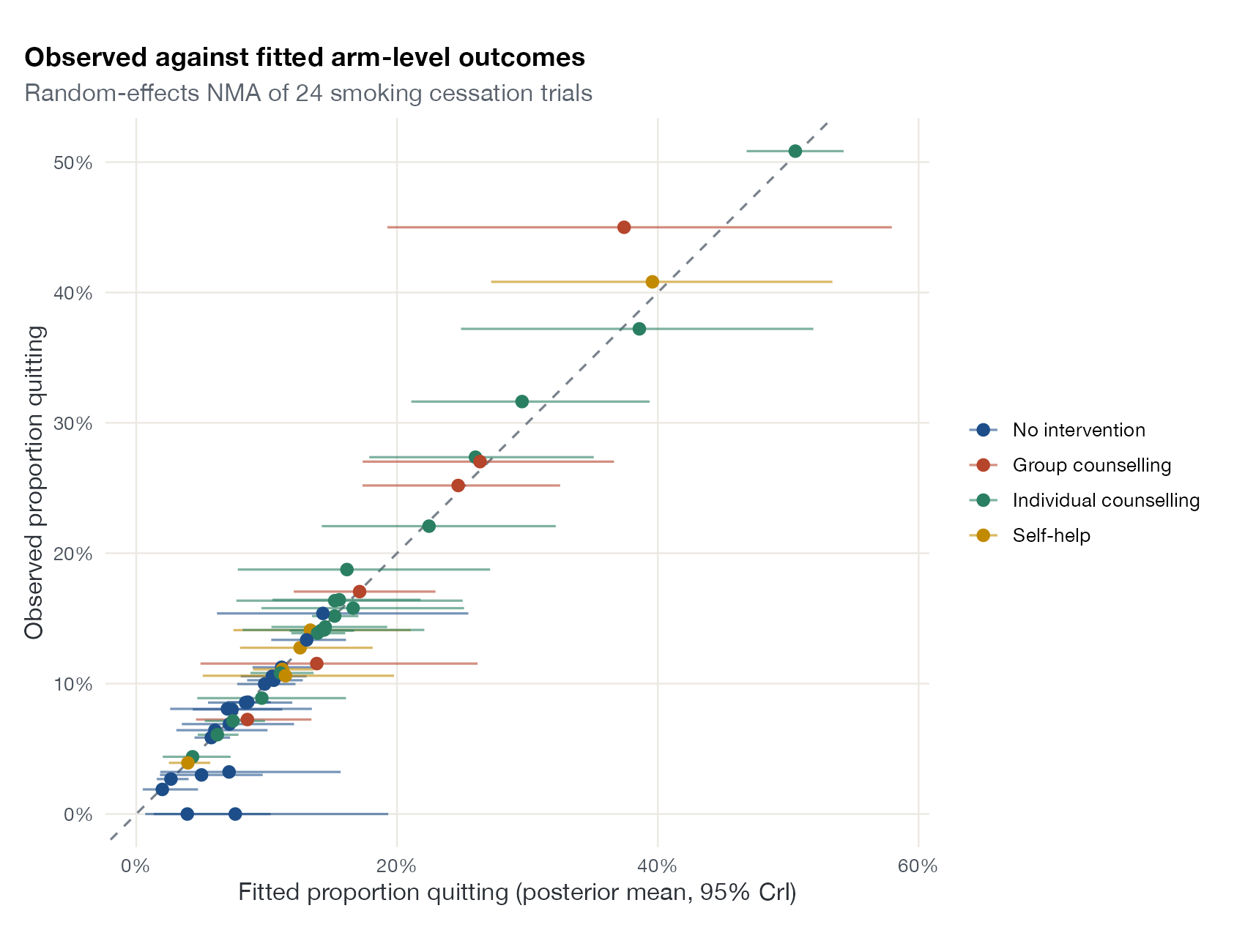
Residuals, fit, predictive checks, and the computational health of Bayesian models.
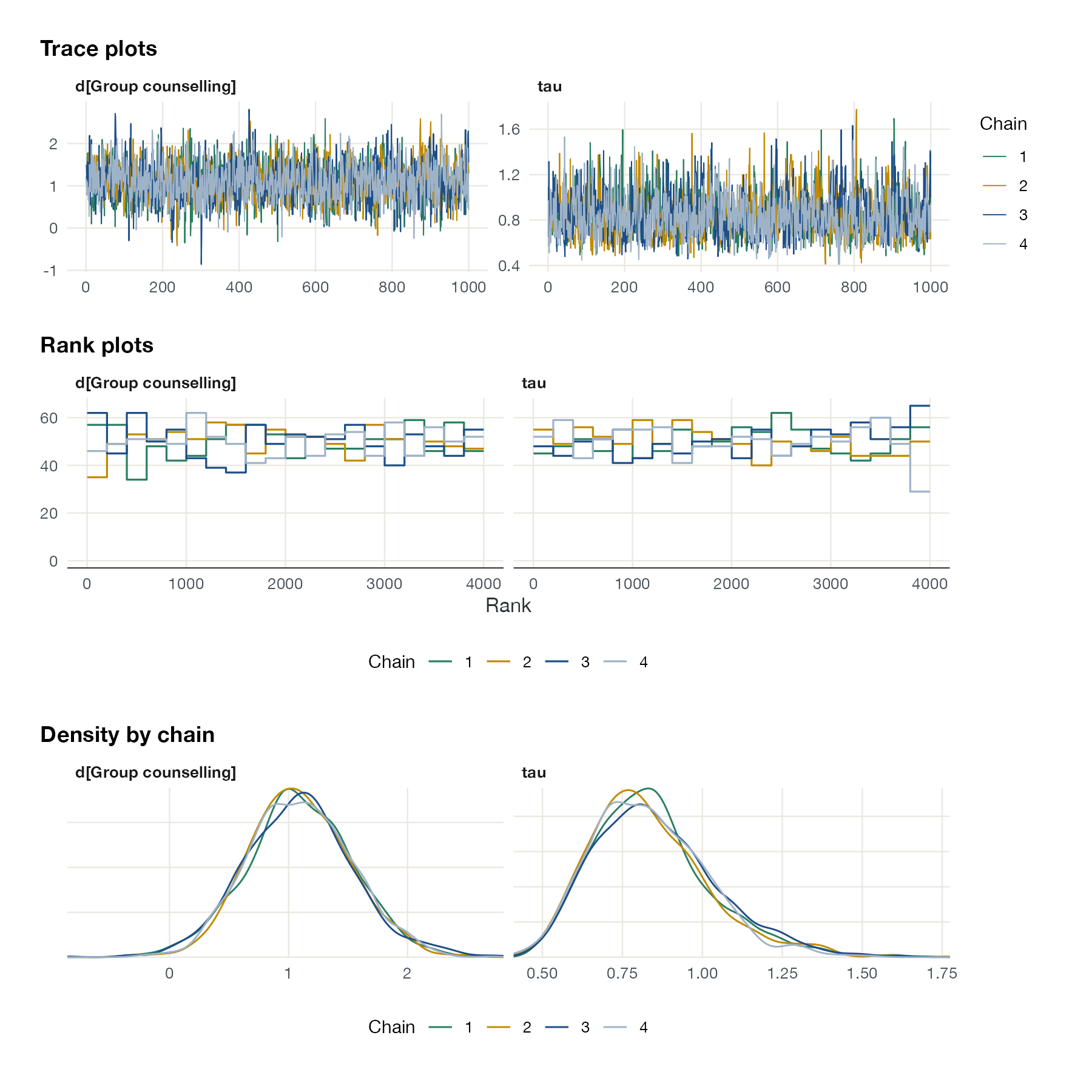
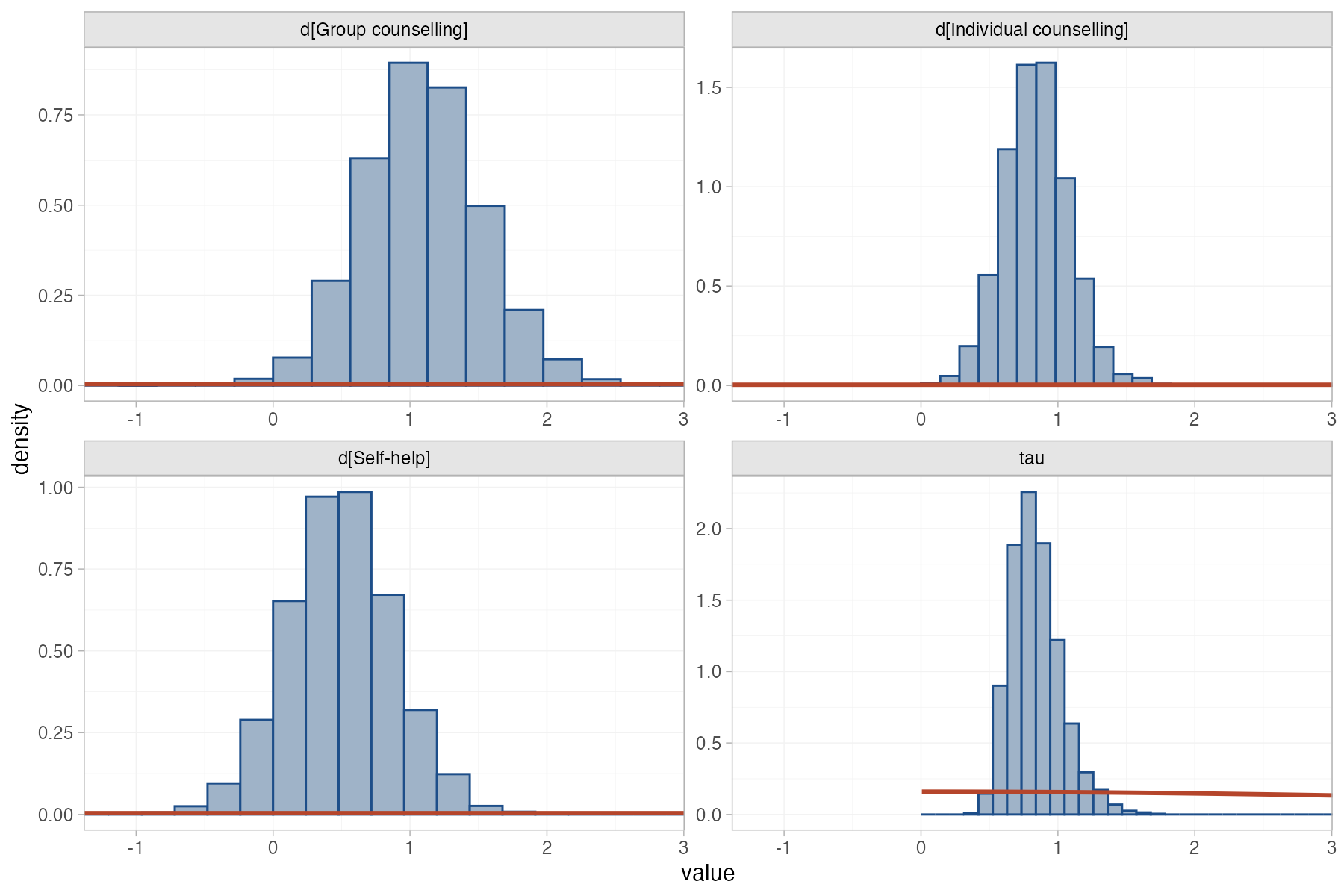
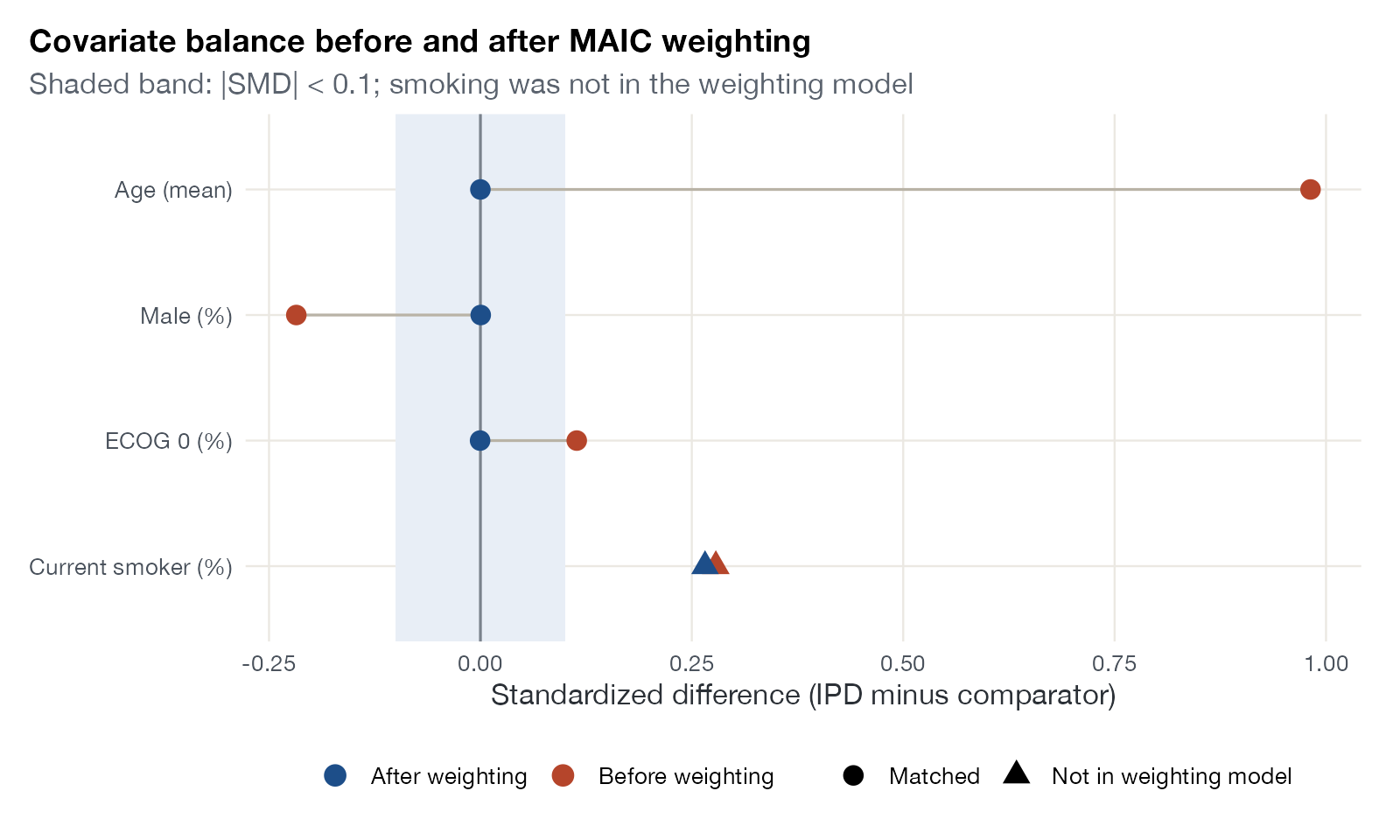
Weighting, balance, and overlap
MAIC diagnostics: what the weights did, how much information survived, and whether populations overlap.
Outcome regression and transportability
STC and G-computation diagnostics: functional form, extrapolation, and effects in a target population.
Multilevel network meta-regression
ML-NMR graphics for mixed IPD and aggregate networks, numerical integration, and population-specific effects.
Unanchored multilevel meta-regression
ML-UMR graphics for disconnected evidence, where prognostic modeling carries the whole comparison.
Survival and time-to-event
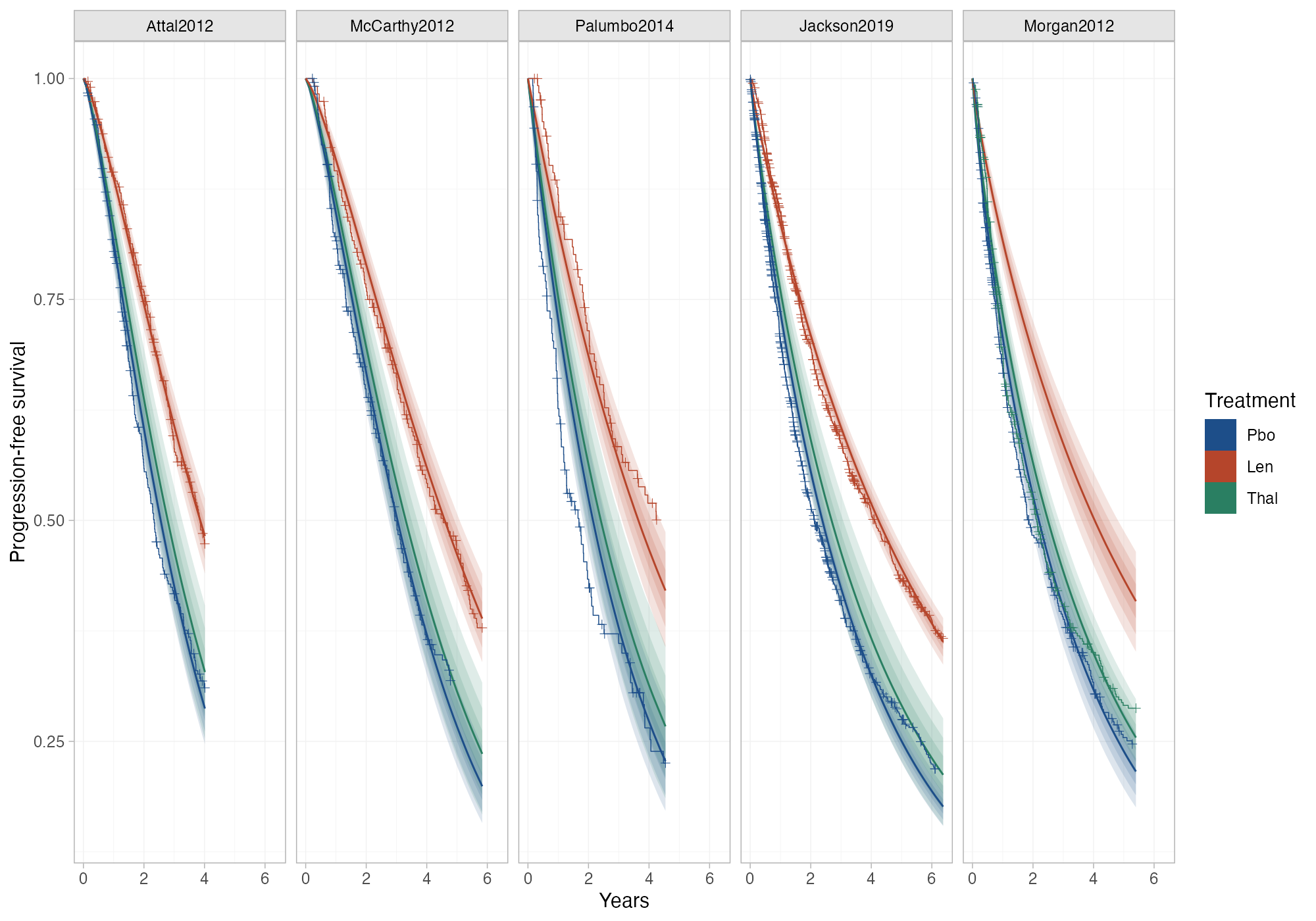
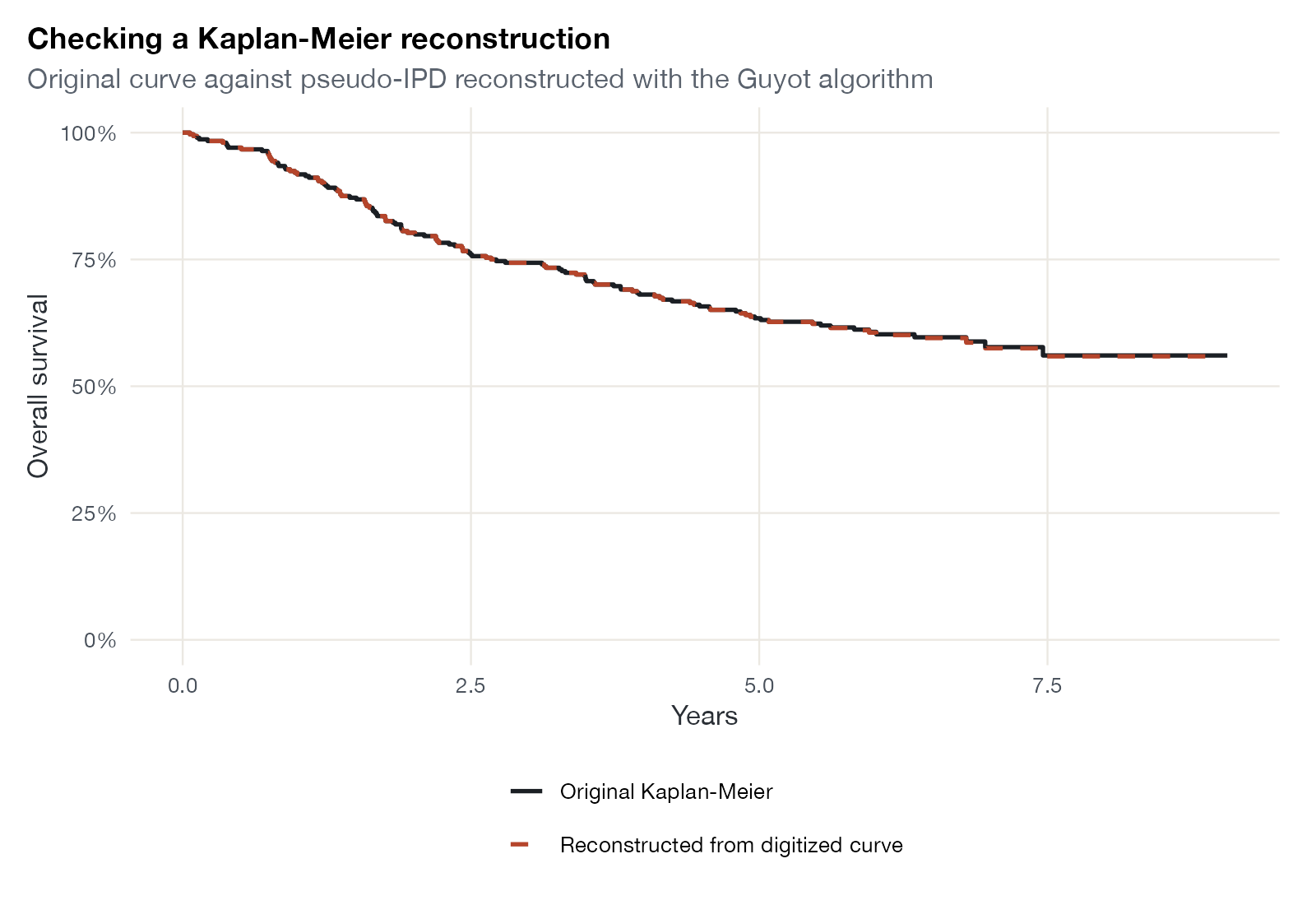
Kaplan-Meier displays, proportional hazards checks, and time-varying effects across ITC methods.
Simulation and method evaluation
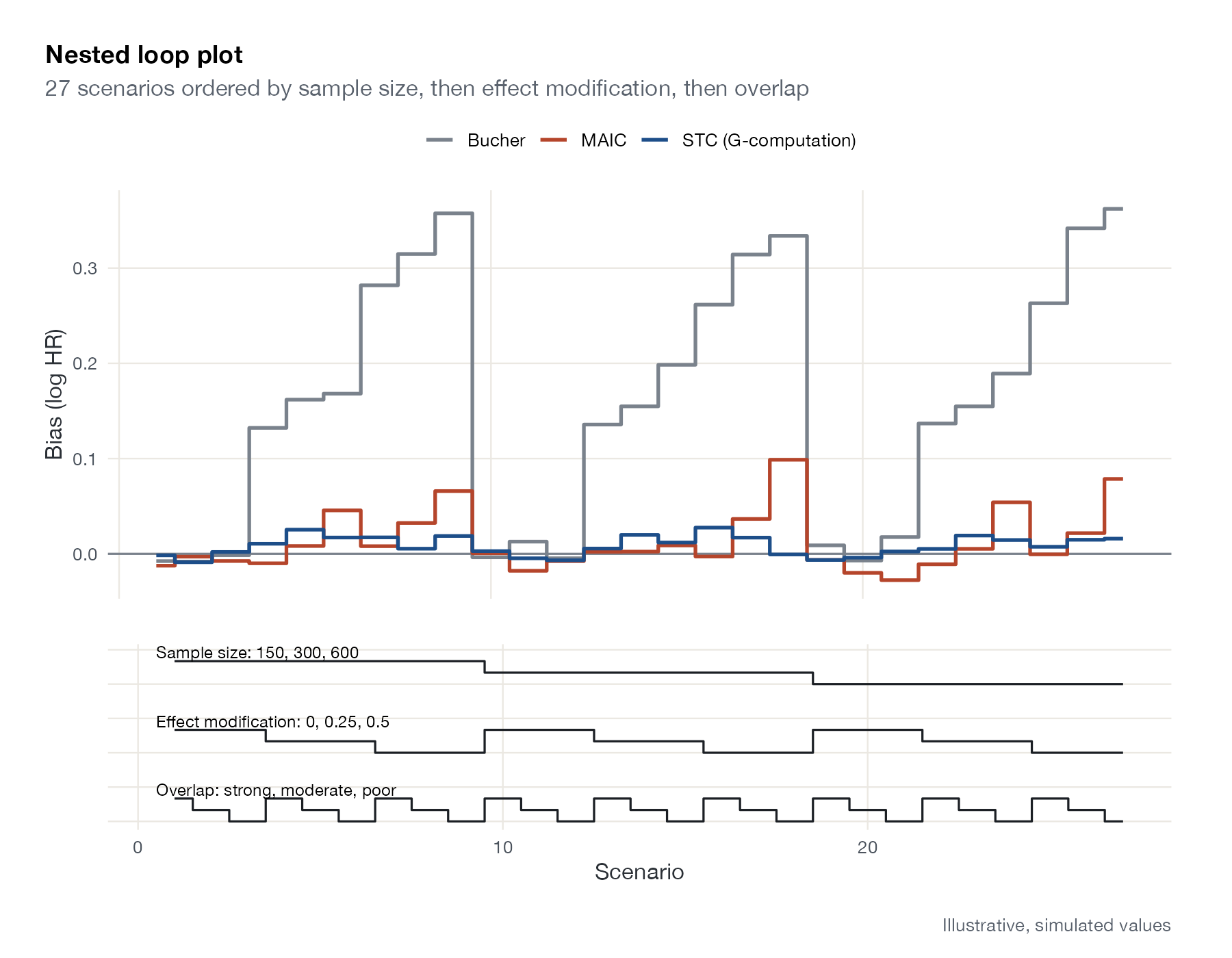
Graphics from the proof-of-concept literature that evaluates methods under known truth.
No plots match this filter. Try another method or search term.