Anchored indirect comparison
Bucher and related comparisons through a common comparator
An anchored indirect comparison estimates A versus B from trials of A versus C and B versus C, preserving randomization within each trial. The Bucher method is the simplest case; population-adjusted methods (MAIC, STC, ML-NMR, NMI) extend it when effect modifiers differ between the trials. Unanchored comparisons, with no common comparator, rely on much stronger assumptions and are covered under MAIC, STC, and ML-UMR.
Minimum graphical set
- An anchored comparison diagram showing the evidence structure and the loss of precision.
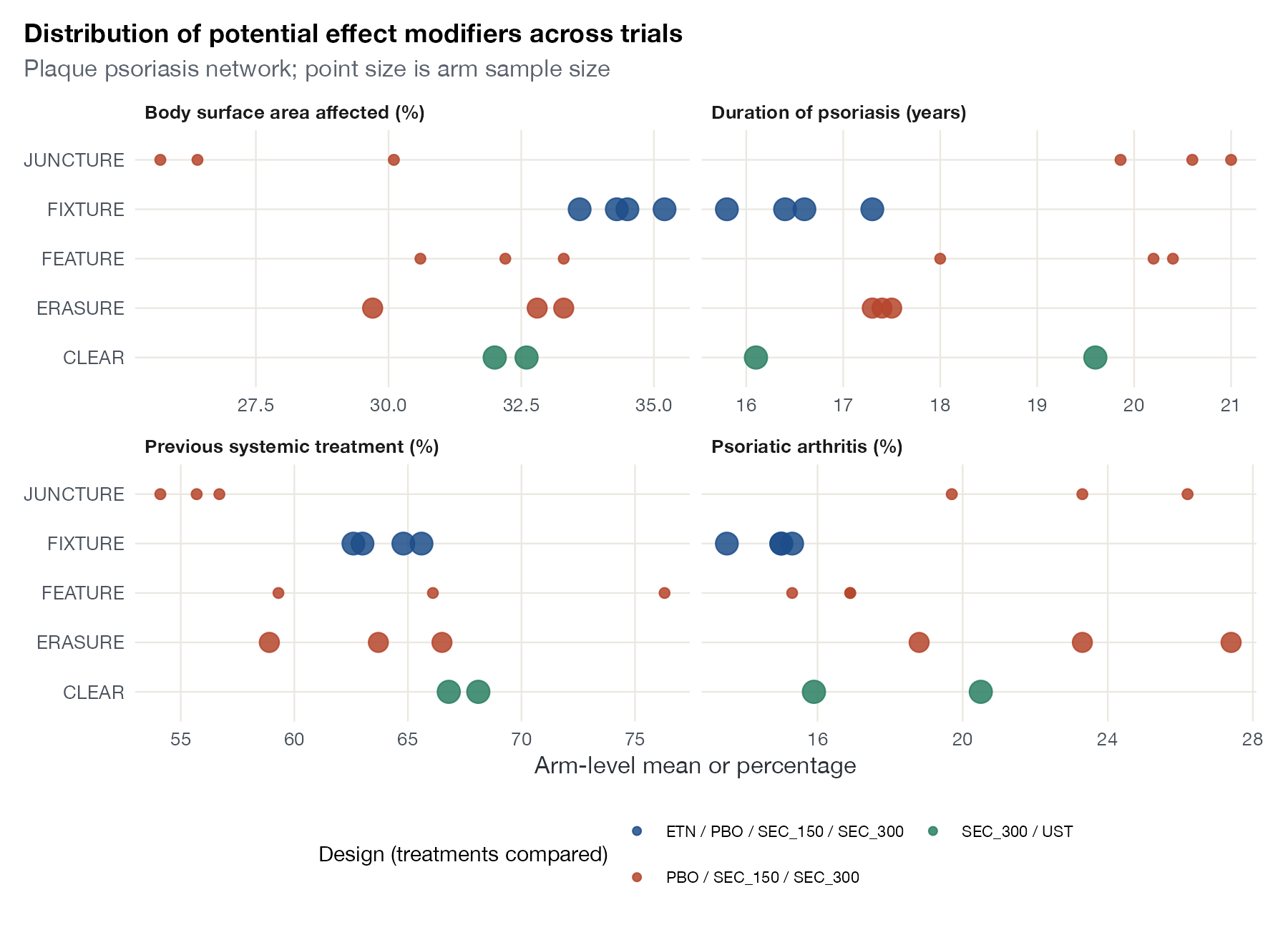
- A transitivity plot comparing the two trial populations on effect modifiers.
- A method-comparison forest when population-adjusted analyses are reported alongside.
All plots for anchored indirect comparisons
Effect display
Estimates, intervals, and pooled summaries: the forest plot and its many descendants.
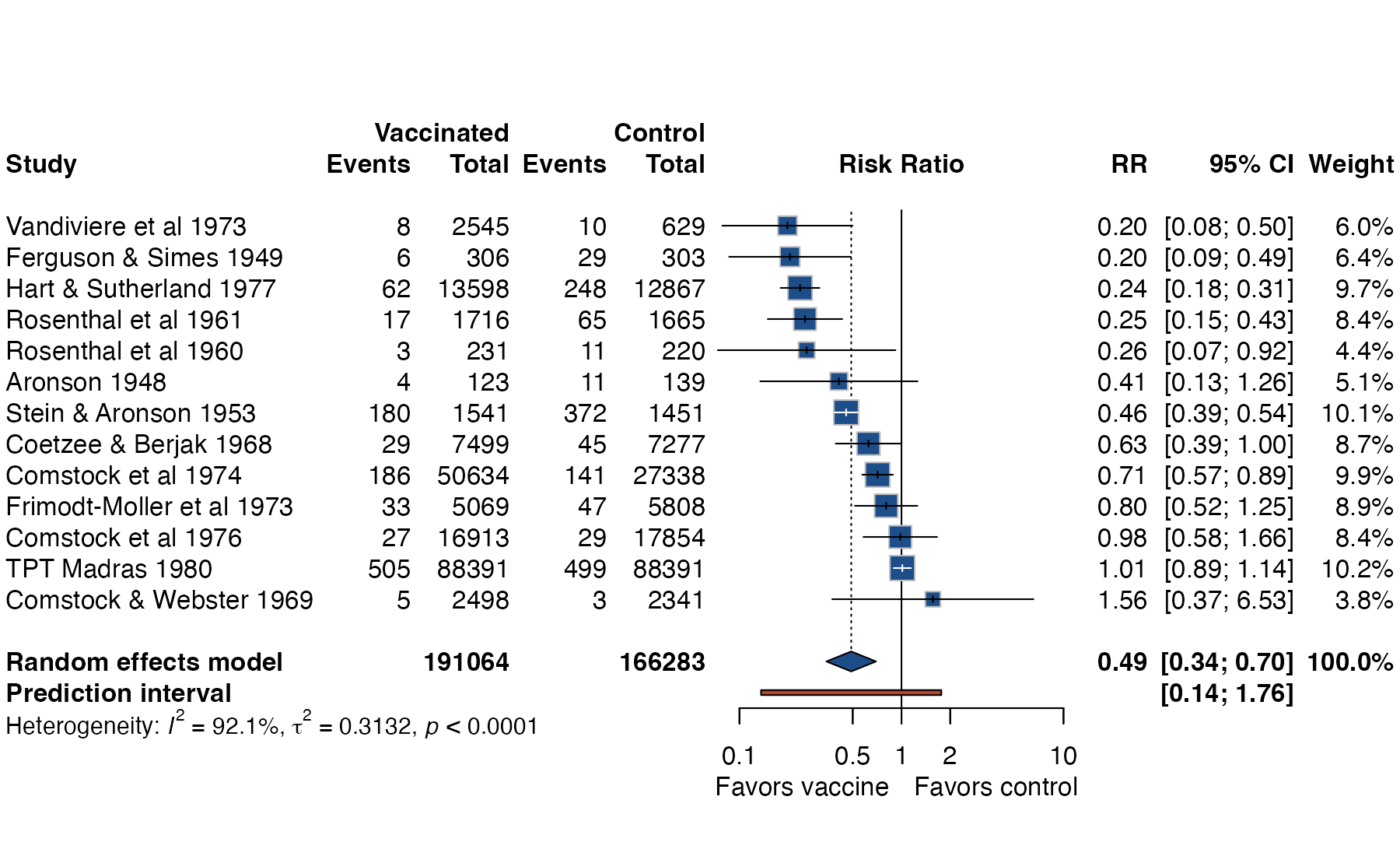
Forest plot
Study estimates and confidence intervals on a common effect scale, with the pooled estimate drawn as a diamond.
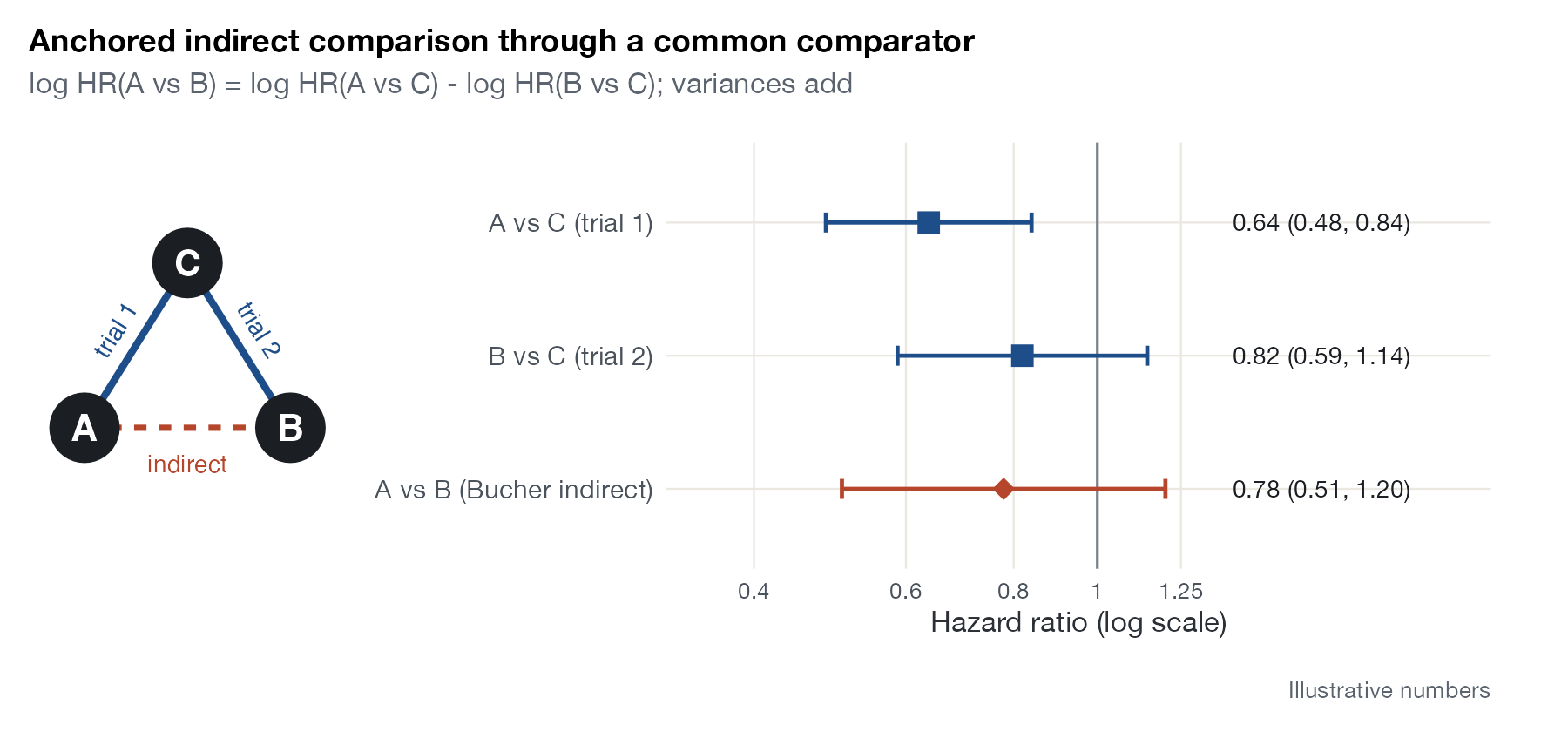
Anchored indirect comparison diagram
Two trials sharing a common comparator and the indirect estimate derived from them, drawn as a network sketch beside a forest plot.
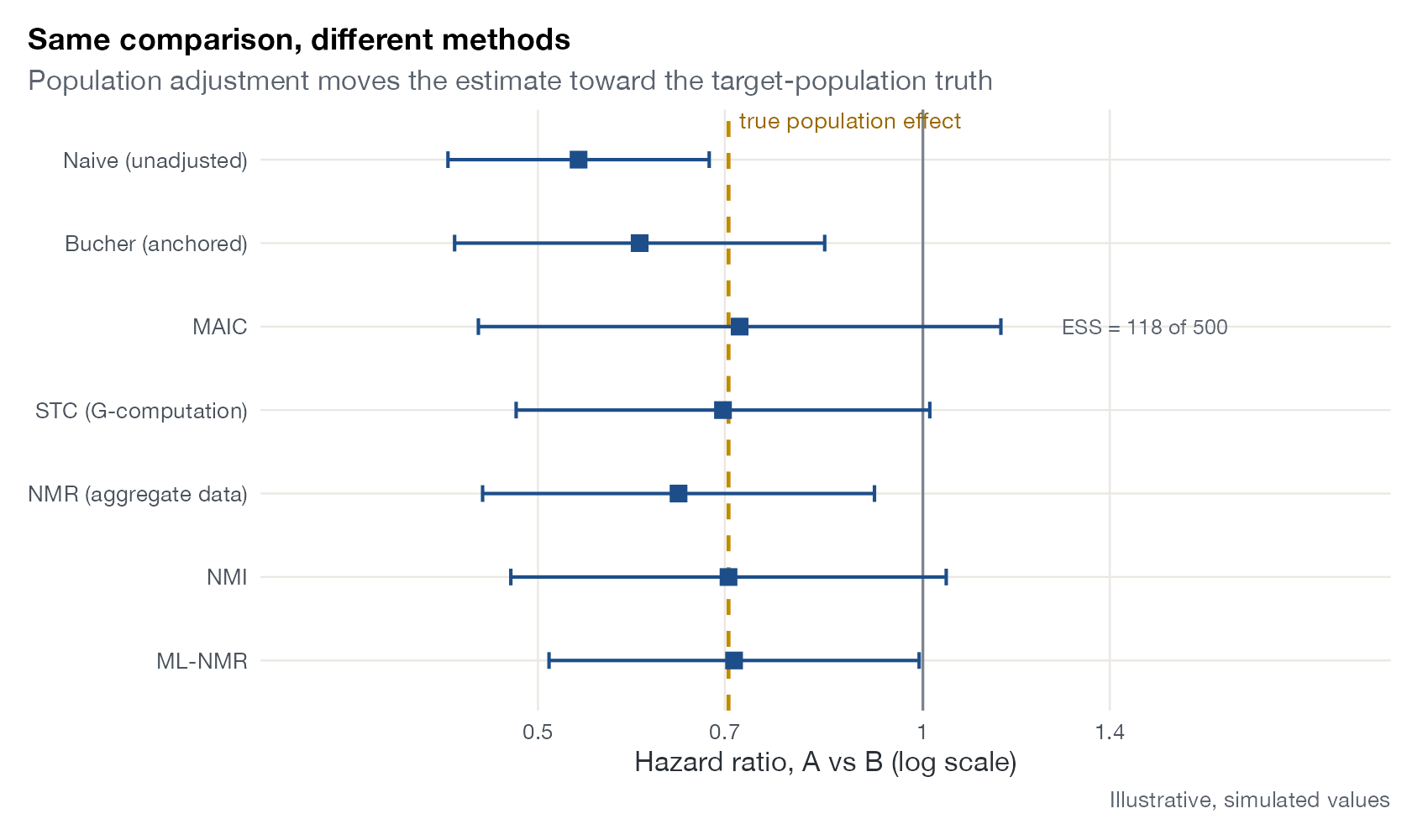
Method-comparison forest plot
The same treatment comparison estimated by several indirect comparison methods, stacked as forest rows, often against a known truth.
Network geometry and evidence flow
Which treatments are compared directly, how much evidence each comparison carries, and where it flows.
No plots match this filter. Try another method or search term.
No matching items